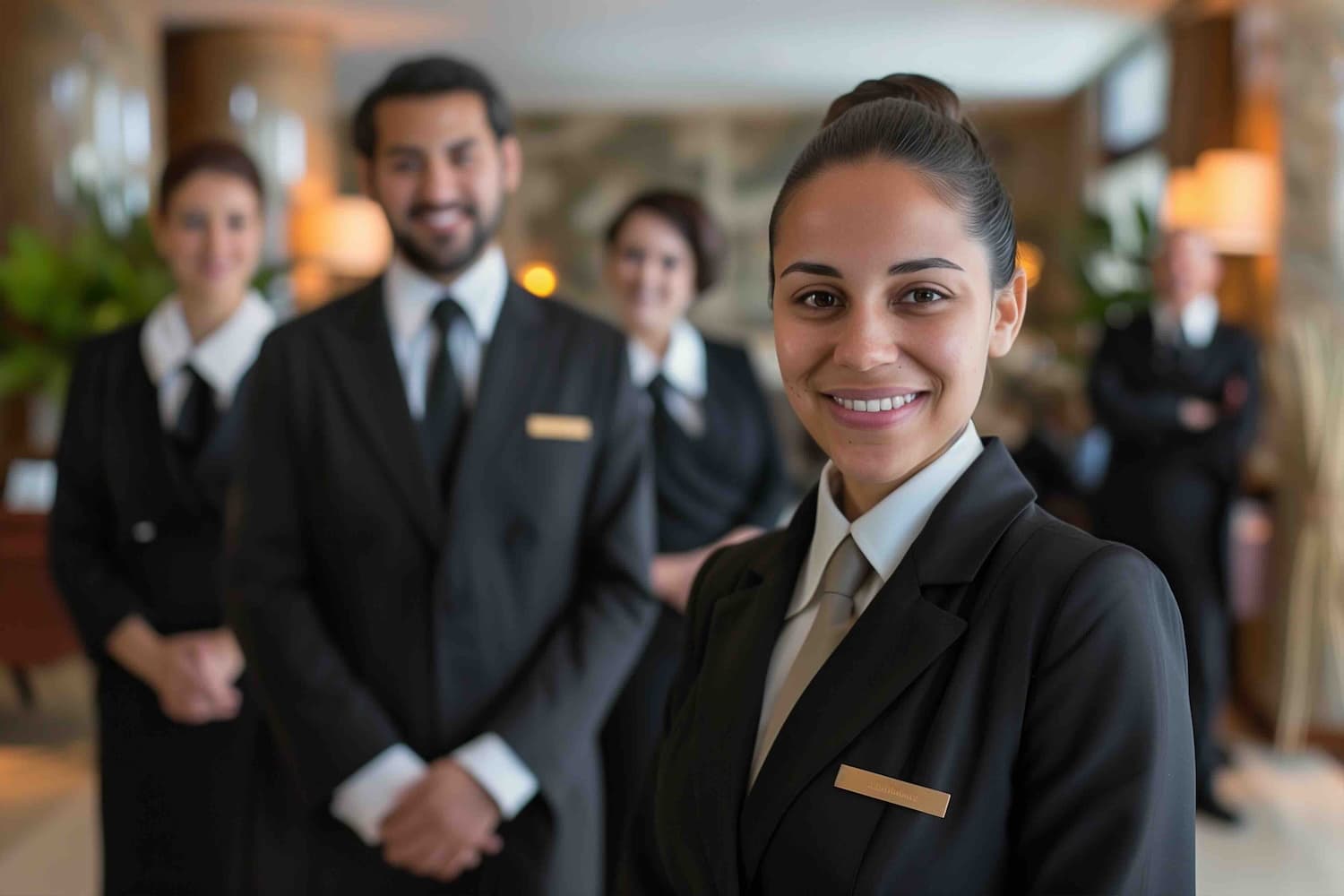
In a 3-star hotel, a guest asks for a taxi at 8 AM. A taxi is booked. In a palace on the French Riviera, the concierge will have already noticed that this guest has an important meeting (suit pressed the night before), checked the weather, ordered a sedan with a driver rather than a simple taxi, and slipped a bottle of water and the morning paper into the back seat. Without being asked.
That is the difference. And that is why recruiting in luxury hospitality is nothing like standard hotel recruitment.
Table of Contents
What Truly Distinguishes Luxury Hospitality
The 'Palace' distinction is not just a matter of prestige. It is an official classification awarded by Atout France that imposes concrete services: 24/7 concierge, valet, permanent room service, porter, butler on request. Services that a classic establishment simply does not offer.
In luxury hospitality, we don't wait for a guest to ask for something to react. We anticipate. The client who books a table at the hotel's gourmet restaurant when he mentioned a seafood allergy during his check-in? The head waiter already knows. The client who has been having her latte every morning at 7:15 sharp on her terrace for three days? Room service is already preparing her order at 7:10 on the fourth day, without her having to call.
This ability to anticipate relies on the flow of information between departments and the continuous presence of dedicated staff. This is what justifies a night in a Côte d'Azur palace starting at €1000 when a 3-star hotel revolves around €150-200.
Technical Skills Are Never Enough
A perfect CV with five years of reception experience guarantees nothing in a palace. Why? Because in luxury, soft skills take precedence over technical skills. Always.
Emotional intelligence is the primary skill sought after. Detecting that a guest is upset before they even say a word. Understanding that a couple on their honeymoon wants privacy while a business traveler expects efficiency. Adapting one's speech, pace, and attitude to each client profile. This relational agility does not appear on any diploma.
Multilingualism Goes Far Beyond Simple "Fluent English"
On the French Riviera, a 5-star hotel reception staff member must ideally master four to five languages: French, English, Italian, Russian, Arabic, or Mandarin depending on the establishment's clientele.
But above all, they must speak them with the appropriate vocabulary and cultural codes. Being informal with an American client might pass, but never with a Japanese client.
General Culture Becomes a Major Asset
Being able to discuss oenology with a guest who loves fine wines, guiding an art enthusiast to the right galleries in Cannes or Monaco, recommending a concert at the Nice Opera with knowledge...
These informal conversations create the bond that transforms a guest into a regular.
Presentation: A Non-Negotiable Criterion
In a palace, appearance is part of the service. Impeccable hair, perfectly fitted uniform, polished shoes, manicured hands.
This is not superficiality; it is professionalism. A guest paying several thousand euros for their stay expects every detail to be irreproachable, including the attire of the staff welcoming them.
Sought-After Profiles: What French Riviera Palaces Really Expect
🔑 Concierge: The Network Above All
A good luxury hotel concierge is not recruited based on a diploma but on their address book. They must be able to pick up the phone and secure a table at a fully booked three-star Michelin restaurant, seats for the Monaco Grand Prix, or an appointment at a jeweler on Place Vendôme in Paris within 48 hours.
Their network is worth gold. The 'Clefs d'Or' (Golden Keys) are not a gimmick; they are the guarantee of belonging to an international network of professionals who help each other.
But the network is not enough. An exceptional concierge knows the region like the back of their hand: the discreet private beaches of Antibes, the best yacht service in Cannes, the confidential wine cellar in Nice, the spa that is truly effective (not just the one paying a commission). They test, verify, and guarantee their recommendations.
💼 Reception: Psychology and Protocol
A palace receptionist juggles administrative rigor and applied psychology. They must simultaneously manage the check-in of a Saudi Sheikh with his entourage of fifteen, handle a specific request from a rock star wanting absolute anonymity, and solve the problem of an American family whose luggage was lost by the airline.
Managing VIPs and delicate situations requires composure and absolute discretion. No information about guests ever leaks. Confidentiality is not an option; it is an ethical obligation.
Confidentiality is not an option; it is an ethical obligation.
🍷 Fine Dining: Technical Excellence AND the Art of Service
In the starred restaurants of Riviera palaces, dining room service requires a dual competence. Technical first: tableside carving, food and wine pairing, perfect knowledge of complex culinary compositions. But also the theatricalization of service: transforming a meal into a memorable experience, telling the story of a dish, creating an emotion.
The sommelier must possess an encyclopedic mental cellar and know how to advise a discerning connoisseur as well as a novice, without ever being condescending to one or intimidating to the other.
✨ Housekeeping: Surgical Precision
Housekeeping staff in a luxury hotel work with millimeter precision. Every sheet fold, every object alignment, every amenity positioned exactly in the right place. A palace is recognized by these invisible details that create perfect harmony.
But here again, observation is key. Memorizing that Mrs. Smith prefers three pillows instead of two, that Mr. Dupont likes to find his French newspapers on his coffee table every morning, that the couple in suite 405 never wishes to be disturbed before 11 AM. And transmitting this information to the team, day after day.
💆 Spa and Wellness: Expertise and Empathy
5-star hotel spas do not settle for standard massages. Practitioners must master advanced techniques, personalize each treatment, and create a bubble of absolute serenity.
Empathy is essential: sensing the client's tension, adapting pressure, pace, and atmosphere to their real needs.
Classic Recruitment Mistakes in Luxury Hospitality
- Recruiting Solely on CV – A brilliant background on paper says nothing about the ability to handle the pressure of a palace in high season, to remain smiling after twelve hours of service, or to maintain a constant level of high standards in the face of difficult clientele.
- Neglecting Real-World Simulations – The best luxury hospitality recruiters always conduct tests under real conditions. How does the candidate react to an impossible request? How do they handle a dissatisfied guest? Do they know how to say no elegantly when necessary? These soft skills are tested in situations, not in classic interviews.
- Underestimating the Importance of Presentation – A candidate who arrives for an interview for a palace job with neglected or inappropriate attire demonstrates that they have not understood the sector's codes. It is disqualifying. Presentation is not a matter of superficiality but of understanding luxury expectations.
- Ignoring Cultural Fit with the Establishment – Every palace has its personality, its DNA, its clientele. An excellent collaborator in a modern, designer palace might not be comfortable in a Belle Époque establishment with more traditional formalism. The attitude must match the establishment's culture.
Specifics of the French Riviera
The French Riviera presents particularities that recruiters must integrate into their strategy.
Intense Seasonality
Between April and October, palaces in Cannes, Nice, Monaco, and Antibes run at full capacity. The Cannes Festival, the Monaco Grand Prix, and summer yacht arrivals create peaks of activity where excellence must remain constant despite the pressure. Teams must be sized accordingly, with intelligent use of qualified extras and seasonal staff.
Ultra-Demanding International Clientele : The French Riviera attracts wealthy clientele from around the world, accustomed to the best palaces on the planet. These guests compare, evaluate, and accept no compromise on quality. Multilingual and culturally agile staff is not a luxury; it is an absolute necessity.
Competition Between Establishments : The best talents are poached, courted, and hired away. Retaining exceptional collaborators becomes a strategic issue. Working conditions, team atmosphere, career prospects: everything counts to keep the best.
Turnover : Between seasonality, the international mobility of luxury professionals, and local competition, building and maintaining stable teams requires a real HR strategy.
Conclusion: Every Hire Is an Investment
In luxury hospitality, a bad hire is expensive. First in image: a disappointed guest does not return and lets it be known. Then in time: training someone who ultimately does not fit mobilizes precious resources. Finally in money: salaries in the high-end sector are high, matching the requirements.
This is why recruiting in this sector requires a specialized approach, keen knowledge of sought-after profiles, and a network of qualified candidates. Experience cannot be standardized, and neither can recruitment.
Find the Best Luxury Hospitality Talent
TalentsHotels connects you with exceptional professionals on the French Riviera. From concierge to management, we understand your specific requirements.
Share this article: